
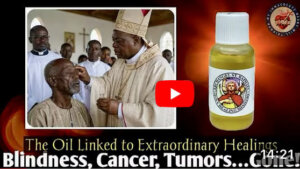


 Fr. Joseph Whalen, our founder, blessed the above video asking God to give his healing blessing to all who watched it in the most Holy Name of Jesus Christ. (if you have the St. Raphael oil please put a cross shape on your forehead then watch it)
JUNE
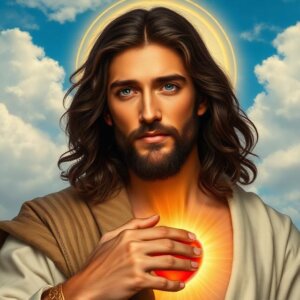 The month of June is dedicated to The Sacred Heart of Jesus. The month of June is the beginning of Ordinary Time, which is represented by the liturgical color green. This symbol of hope is the color of the sprouting seed and arouses in the faithful the hope of reaping the eternal harvest of heaven, especially the hope of a glorious resurrection. It is used in the offices and Masses of Ordinary Time.
The Holy Father’s Intentions for the Month of JUNE 2026
The Holy Father’s Intentions for the Month of June 2026
For the values of sports: Let us pray that sports be an instrument of peace, encounter, and dialogue among cultures and nations, and that they promote values such as respect, solidarity, and personal growth. (See also Apostleship of Prayer.)

The gifts received by us from God are derived not from ourselves but from the Holy Spirit, and are to be used, in a spirit of humility, in the service of the Church and of our brothers and sisters.
Lord Jesus, You bless what the world often ignores or rejects. Shape my heart according to the Beatitudes You proclaimed. Give me humility, mercy, and a hunger for righteousness. May my joy be rooted in Your promises, not in the comforts of the world. Amen.
ORDINARY
TIME: JUNE 8th
Monday of the Tenth Week in Ordinary Time
Other Commemorations: St. Medard, Bishop (RM)
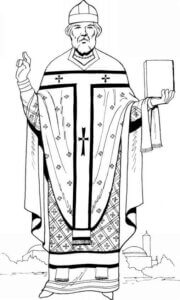 The Roman Martyrology commemorates St. Médard (456-545), Bishop of Noyon, France. Legend says that once when he was a child a sudden shower fell, soaking everyone except St. Médard who remained perfectly dry, because an eagle had spread its wings over him. Ever since, Médard was known as “master of rain” or his patronage against bad weather and who to invoke for good weather. In religious art, an eagle shelters Médard from the rain.
St. Médard of Noyon
Bishop of Noyon, born at Salency (Oise) about 456 and died in his episcopal city June 8, about 545. His father, Nectardus, was of Frankish origin, while his mother, named Protagia, was Gallo-Roman. It is believed that St. Gildardus, Bishop of Rouen, was his brother. His youth was entirely consecrated to the practise of Christian virtues and to the study of sacred and profane letters. He often accompanied his father on business to Vermand and to Tournai, and frequented the schools, carefully avoiding all worldly dissipation.
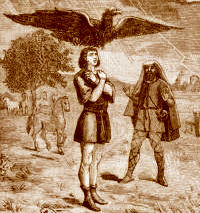 His exemplary piety and his knowledge, considerable for that time, decided the Bishop of Vermand (d. 530) to confer on him Holy Orders, and caused him to be chosen as his successor. Forced, in spite of his objections, to accept this heavy charge, he devoted himself zealously to his new duties. In an effort to accomplish those duties in greater security, since Vermand and the northern part of France in general were then generally troubled by wars and exposed to the incursions of the barbarians, he removed his episcopal see in 531 from Vermand, a little city without defence, to Noyon, the strongest place in that region.
The year following, St. Eleutherius, Bishop of Tournai, died and St. Médard was invited to assume the direction of that diocese also. He refused at first, but being urged by Clotaire himself he at last accepted. This union of the two dioceses lasted until 1146, when they were again separated.
Clotaire, who had paid him a last visit at Noyon, had his body transferred to the royal manor of Crouy at the gates of the city of Soissons. Over the tomb of St. Médard was erected the celebrated Benedictine abbey which bears his name.
St. Médard was one of the most honoured bishops of his time, his memory has always been popularly venerated in the north of France, and he soon became the hero of numerous legends. One of which says that if it rains on St. Médard’s feast day it will be followed by forty days of rain; and forty days of sunshine will follow if it is clear.
—Excerpted from the Catholic Encyclopedia
Patronage: against bad weather; against imprisonment; against sterility; brewers; captives; harvests; for good weather; for rain; imprisoned people; mentally ill people; peasants; prisoners; toothache; vineyards.
Symbols and Representation: two white doves; three white doves; eagle; knife; ox; colt; torch; tooth
Often Portrayed as: being sheltered from rain by an eagle or other large bird; holding a citadel; laughing aloud with his mouth wide open; leaving footprints in stone; with two horses at his feet
Highlights and Things to Do:
- Fourteen centuries ago as bishop of Tournai in Picardy, France, Médard founded the annual Rose Festival (Fetes des Roses). It is still held there on this day, and the region’s most beautiful and virtuous maiden is crowned. According to CatholicSaints.info, “Rosiere is awarded to the young girl who has been judged the most virtuous and exemplary in the region of Salency, France; she is escorted by 12 boys and 12 girls to the church, where she is crowned with roses and given a gift of money. This is a continuation of a yearly stipend or “scholarship” he apparently instituted when bishop.”
- Invoke St. Médard in cases against bad weather.
- Not only is St. Médard a patron of weather and meteorology, he is also a patron against toothaches, since he was depicted laughing with his mouth open.
- Read more about St. Médard:
MASS READINGS
June 08, 2026 (Readings on USCCB website)
PROPERS [Show]
COLLECT PRAYER

Daily Meditation: Matthew 5:1-12
Blessed are the clean of heart, for they will see God. (Matthew 5:8)
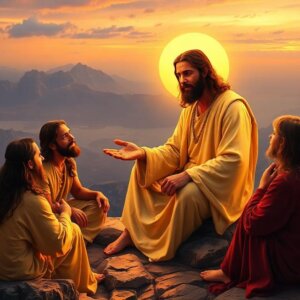 When Jesus talks about “the clean of heart” seeing God in today’s Gospel, he’s talking about the beatific vision, that glorious moment when the blessed—everyone whose hearts have been purified—see God face-to-face (Matthew 5:8). What a contrast to our experience in this life! We all know what it’s like to have our vision of Jesus obscured by sin. It’s like wearing glasses that are smudged and filled with dust and dirt.
But the promise of the gospel is that we can turn away from sin. We can be set free from its power over us. And as we repent, we become able to see God a little more clearly. Our hearts become a little more purified. And we find the grace to act differently, to love God and love our neighbor in a way that prepares us for the full beatific vision of heaven.
But it’s not just clearing up our vision that purifies us; it’s also keeping our eyes fixed on the Lord throughout the day. As we hold fast to our vision of Jesus, however cloudy that vision might be, the Holy Spirit takes our efforts and exchanges them with his own divine grace. He helps our intentions line up even better with God’s vision and he makes us even more ready for heaven.
Here’s one small example of how this process of purification might play out in our lives. Let’s say you’ve been getting drawn into neighborhood gossip and have caught yourself saying unkind things about people behind their backs. You’ve brought the sin to Confession. The next week, you overhear two neighbors talking about the person down the street. They’re criticizing her for not weeding her garden.
This time, instead of getting sucked into saying something negative, you find a way to steer the conversation to a different topic. Maybe you even make a positive comment about the neighbor with the weedy garden. That’s God at work! And because you cooperated with him, your vision of him became just a little clearer and your heart just a little more like his.
So keep cleaning your spiritual glasses and asking yourself, “Where will I see God today?”
“Jesus, I long to see you. Help me turn away from sin. Purify my heart as I gaze on you.”
1 Kings 17:1-6
Psalm 121:1-8
 8TH JUNE 2026
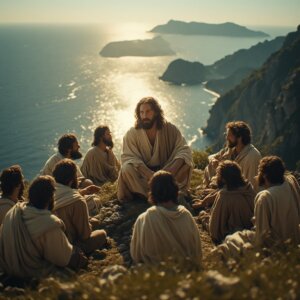
Friends, in today’s Gospel, Jesus goes up a mountain and sits down to teach. In the Old Testament, we find Moses, the great teacher, also going up a mountain to receive the law and then sitting down to teach it. However, Jesus is not receiving a law; he is giving one.
Theologian N. T. Wright has pointed out that the Old Testament is essentially an unfinished symphony. It is the articulation of a hope but without a realization of that hope. Thus, as the fulfillment of Israel’s entire story, Jesus begins his primary teaching with the Beatitudes, a title that stems from the Latin noun beatitudo, meaning “happy” or “blessed.”
Through this series of paradoxes, surprises, and reversals, Jesus begins setting a topsy-turvy universe aright. How should we understand them? A key is the Greek word makarios, rendered “blessed” or “happy” or perhaps even “lucky,” which is used to start each of the Beatitudes.
And so, “Blessed are the poor in spirit.” We might say, “How lucky you are if you are not addicted to material things.” Here Jesus is telling us how to realize our deepest desire, which is the desire for God and not for passing things that only bring temporary comfort.
https://www.wordonfire.org/todays-reflection/

(Hymn at Lauds)
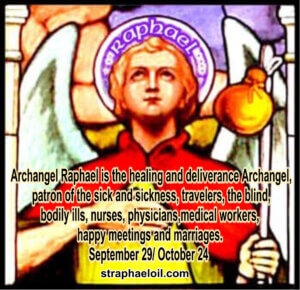
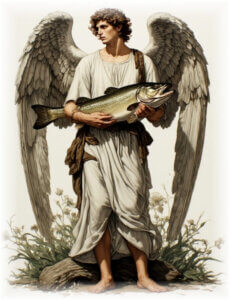
The feast day of Raphael was included for the first time in the General Roman Calendar in 1921, for celebration on October 24. With the 1969 revision of the General Roman Calendar, the feast was transferred to September 29 for celebration together with archangels Saints Michael and Gabriel.
St. Raphael in the traditional calendar (October 24) — which continues to be observed not only in communities which follow the Extraordinary Form of the Roman Rite , but also in those locales where St. Raphael is a patron.
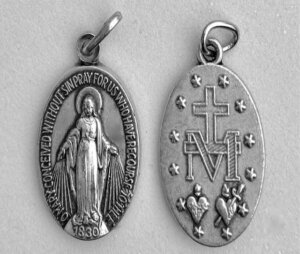
In 1830, one of the apparitions sanctioned by the Roman Catholic Church occurred in the chapel of the Daughters of Charity of St. Vincent de Paul, Rue de Bac, Paris. There were three visions given to Saint Catherine Laboure who, at the time of the first one, was a novice in the order. She was awakened at 11:30 PM on the eve of the Feast of St. Vincent de Paul, by a “shining child” who led her to the chapel where she saw Our Lady, who spoke to her for two hours about the difficult task that lay ahead. Four months later, on November 27 Catherine had the second vision wherein she saw a three-dimensional scene of the Blessed Virgin standing on a white globe with dazzling rays of light streaming from her fingers and she heard a voice say:
“There now formed around the Blessed Virgin a frame rather oval in shape on which were written in letters of gold these words: ‘O Mary conceived without sin, pray for us who have recourse to Thee’
This sacramental from Heaven was at first called simply the Medal of the Immaculate Conception, but began to be known as the Miraculous Medal due to the unprecedented number of miracles, conversions, cures, and acts of protection attributed to Our Lady’s intercession for those who wore it.
Sister Catherine became Saint Catherine in 1947. The church instituted recognition of the apparition in which the Miraculous Medal first appeared for November 27, 1830. Millions of the Miraculous Medal have been distributed, and many graces and miracles have been received through this devotion to Our Lady.
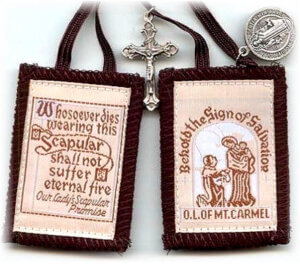
BROWN SCAPULAR OF MT. CARMEL
Virgin Mary’s promise to Saint Simon Stock
July 16, 1251″Wear it devoutly and perserveringly,” she says to each soul, “it is my garment. To be clothed in it means you are continually thinking of me, and I in turn, am always thinking of you and helping you to secure eternal life.”
The scapular is an external sign of the filial relationship established between the Blessed Virgin Mary, Mother and Queen of Mount Carmel, and the faithful who entrust themselves totally to her protection, who have recourse to her maternal intercession, who are mindful of the primacy of the spiritual life and the need for prayer.
THE SABBATINE PRIVELEGE
The blessed Virgin of Mt. Carmel has promised to save those who wear the scapular fromthe fires of Hell; She will also shorten their stay in Purgatory if they should passfrom this world still owing some temporal debt of punishment.
The Blessed Virgin appeared to him and speaking of those who wear the Brown Scapular said: “I, the Mother of grace, shall descend on the Saturday after their death and whomsoever I shall find in Purgatory, I shall free, so that I may lead them to the holy mountain of life everlasting.”
Pope Benedict XV proceeded to grant an indulgence of 500 days for each time the cloth Scapular is kissed”. On July 16th, the Scapular feast, while addressing the seminarians of Rome, Benedict XV said: “Let all of you have a common language and a common armor: the language, the sentences of the Gospel; the common armor, the Scapular of the Virgin of Carmel, which you all ought to wear and which enjoys the singular privilege of protection even after death.”
The Brown Scapular | A Sacramental
“One of the most remarkable effects of sacramentals is the virtue to drive away evil spirits whose mysterious and baleful operations affect sometimes the physical activity of man. To combat this occult power the Church has recourse to exorcism, and sacramentals” (The Catholic Encyclopedia., 1913, VXIII, p. 293).
The Brown Scapular | A True Story
You will understand why the Devil works against those who promote the brown scapular when you hear the true story of Venerable Francis Yepes. One day his Scapular fell off. As he replaced it, the Devil howled, “Take off that habit which snatches so many souls from us! All those clothed in it die piously and escape us!” Then and there Francis made the Devil admit that there are three things which the demons are most afraid of: the Holy Name of Jesus; theHoly Name of Mary and the Holy Scapular of Carmel.“Modern Heretics make a mockery of wearing the Scapular. They decry it as so much trifling nonsense.” – St. Alphonsus LigouriMary, Mother of God and Our Mother“When Mary became the Mother of Jesus, true God and true Man, She also became our Mother. In His great mercy, Jesus wished to call us His brothers and sisters, and by this name He constituted us adopted children of Mary.” – St. John BoscoOver the years there have also been many miracles associated with wearing the brown scapular.
*If you would like a brown scapular click here: